
Hair Types
Understanding Your Hair Type: A Scientific Approach
Learn how follicle shape, porosity, and density determine your hair type — and why it matters for product choice.
Decode ingredient labels, understand your hair type, and build a routine that actually works. Evidence-based guidance for natural hair care — free of hype, rooted in science.

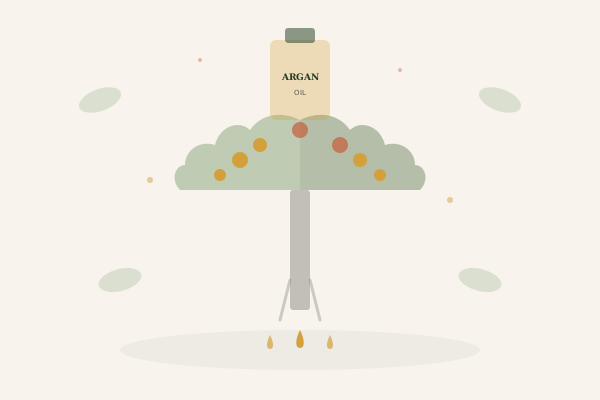
Pressed from the kernels of the Moroccan argan tree, argan oil is rich in vitamin E, essential fatty acids, and antioxidants. It's one of the most versatile natural oils for hair — penetrating the shaft to moisturize from within, smoothing the cuticle, and reducing breakage without heaviness.
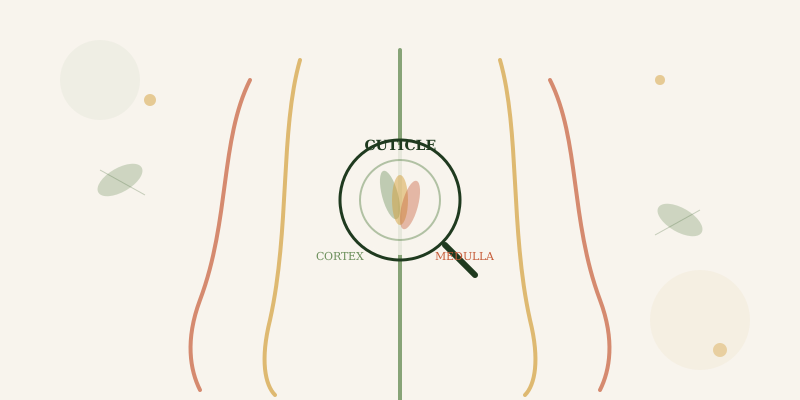
Hair type is determined by the shape of the hair follicle. Understanding yours is the first step to choosing the right products and routine.

Round follicle, no curl pattern. Prone to oiliness; benefits from lightweight hydration.

Oval follicle, loose S-shape. Needs moisture balance and frizz control.

Oval-to-flat follicle, defined spirals. Craves hydration and gentle cleansing.

Flat follicle, tight zig-zag pattern. Most fragile; needs rich moisture and minimal manipulation.
A quick guide to common hair care ingredients — what to look for and what to avoid.
A gentle, coconut-derived surfactant that cleanses without stripping natural oils.
A humectant that draws moisture into the hair shaft, keeping it hydrated.
Argan oil — rich in vitamin E and fatty acids for deep, lightweight moisture.
A strong detergent that can strip color and natural oils. Fine for occasional deep-cleanse.
A silicone that smooths hair temporarily but can build up over time without clarifying.
DMDM hydantoin and similar preservatives release trace formaldehyde — a known irritant.
Small swaps that reduce waste without compromising your hair care results.

Solid shampoo bars eliminate plastic bottles and last 2-3x longer than liquid equivalents.

Concentrated refills use up to 70% less packaging. Look for aluminum or glass containers.
A little shampoo goes far. Diluting with water extends product life and reduces waste.
Evidence-based guides on natural hair care, ingredient science, and clean beauty.
Learn how follicle shape, porosity, and density determine your hair type — and why it matters for product choice.
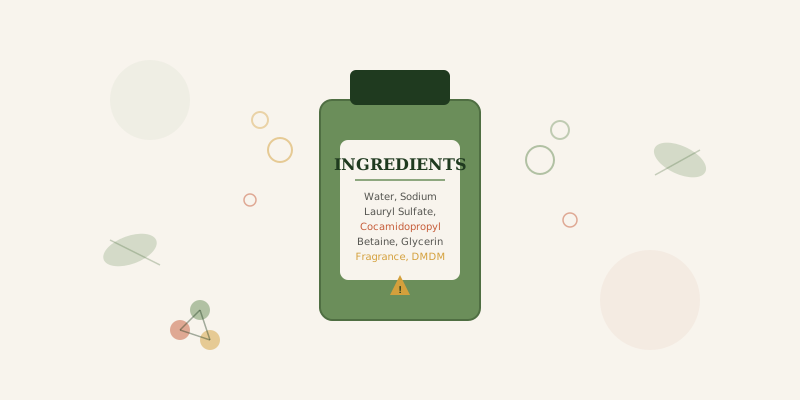
Sulfates aren't automatically harmful — but they're not for everyone. Here's the science behind them.
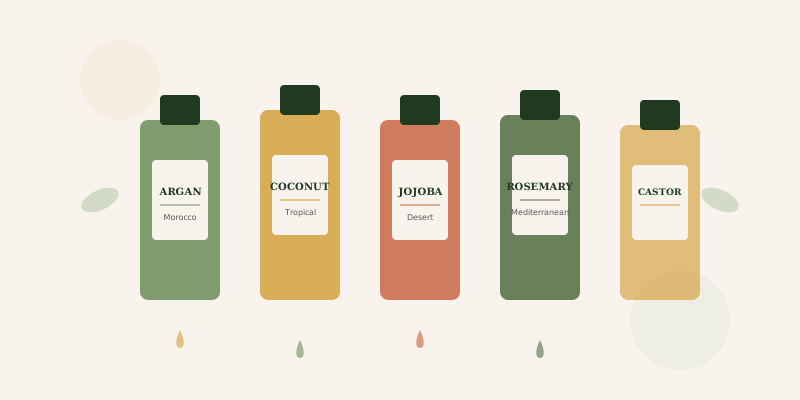
From argan to castor, here's what each popular hair oil actually does — backed by chemistry.