
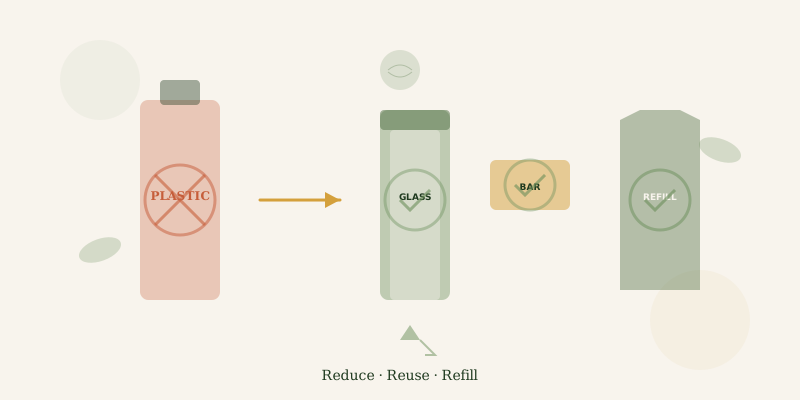
The average bathroom contains dozens of plastic bottles — shampoo, conditioner, body wash, lotion, styling products. Most are used for a few weeks and then discarded, ending up in landfills or waterways. The beauty industry produces 120 billion units of packaging annually, and the vast majority is plastic.
But reducing bathroom plastic doesn't have to mean compromising your hair care results. With a few strategic swaps, you can dramatically cut your plastic footprint while maintaining — even improving — your routine. Here's how.
The Scale of the Problem
Before we get to solutions, it helps to understand the problem:
- The beauty industry generates 120 billion units of packaging annually
- Only about 9% of plastic ever produced has been recycled
- An estimated 14,000 tons of sunscreen wash into coral reefs each year — but hair products contribute to waterway pollution too
- The average person uses 10-15 hair and body products simultaneously, most in plastic containers
The good news: individual choices, when adopted widely, drive industry change. Here are the most effective swaps you can make today.
Swap 1: Shampoo and Conditioner Bars
Solid shampoo and conditioner bars are concentrated formulations without water, packaged in cardboard or sold loose. One bar typically replaces 2-3 bottles of liquid product.
Benefits:
- Zero plastic packaging (look for bars sold loose or in cardboard)
- Last 2-3x longer than equivalent liquid products
- Lighter and more compact — ideal for travel
- Concentrated — no paying for water
How to transition:
Shampoo bars may feel different at first. They produce less lather than liquid shampoo (which is fine — lather doesn't equal cleaning). To use, rub the bar directly onto wet hair in circular motions, or lather in hands first. Store bars on a soap dish that allows drainage; they dissolve if left in water.
Some bars leave a residue, especially in hard water areas. If this happens, do a final rinse with diluted apple cider vinegar (1 tablespoon per cup of water) to remove buildup.
"The most sustainable product is the one you actually use. Don't force a swap that doesn't work for your hair — find the one that does."
Swap 2: Refillable and Bulk Products
Many brands now offer refill programs. You buy a durable container once (glass or aluminum), then purchase refills in concentrated or minimal packaging.
Types of refills:
- Concentrated refills: Smaller pouches you dilute with water at home. Uses 70% less packaging.
- Bulk refill stations: Some zero-waste stores let you refill your own containers. Bring a glass bottle, fill with shampoo, pay by weight.
- Returnable containers: Some brands take back empty containers, sterilize, and reuse them.
Considerations:
Refill systems work best when you have a consistent routine. If you like experimenting with different products, refills may not be practical. Start with one product (like your daily shampoo) and expand from there.
Swap 3: Glass and Aluminum Packaging
When refills aren't available, choose products in glass or aluminum. Unlike plastic, these materials can be recycled indefinitely without quality loss. Glass is infinitely recyclable; aluminum recycles with only 5% of the energy required to produce new aluminum.
Reality check:
Glass and aluminum have higher manufacturing emissions than plastic, so their benefit depends on actually being recycled. If your local recycling doesn't accept them, they're no better than plastic. Check your local recycling capabilities before choosing based on material.
Swap 4: Concentrate Tablets and Powders
An emerging category: products sold as dry tablets or powders that you mix with water at home in a reusable bottle. This dramatically reduces shipping weight and packaging.
- Shampoo concentrates: Tablets dissolved in water create liquid shampoo in your existing bottle
- Conditioner powders: Mixed with water before use
- Dry shampoo powders: Already common; dispense from a shaker rather than an aerosol
These products are still niche, but they represent the future of low-waste beauty.
Swap 5: Bamboo and Wooden Tools
Don't forget the accessories. Replace plastic combs, brushes, and hair ties with sustainable alternatives:
- Bamboo brushes and combs: Biodegradable, durable, and gentle on hair
- Wooden hair sticks: Replace plastic hair ties and clips
- Plastic-free hair ties: Made from natural rubber and organic cotton; fully compostable
- Boar bristle brushes: Natural bristles distribute scalp oils; wooden handles are biodegradable
Swap 6: Multi-Purpose Products
The most sustainable product is the one you don't buy. Reducing the number of products in your routine automatically reduces packaging. Our minimalist routine guide shows how to thrive with just 3 products.
Multi-purpose products reduce packaging further:
- Shampoo-conditioner bars: Some bars cleanse and condition in one step
- Body-hair oils: A single oil (like jojoba) can moisturize skin and smooth hair
- All-purpose balms: Work for hair ends, cuticles, and dry skin
Swap 7: Avoid Microplastics
Some hair products contain liquid microplastics — polymers like PVP (polyvinylpyrrolidone), acrylates copolymer, and carbomer. These wash down the drain and accumulate in waterways because they're too small for water treatment plants to filter.
To avoid them, check ingredient lists for:
- Polyvinylpyrrolidone (PVP)
- Acrylates copolymer / crosspolymer
- Carbomer
- Polyquaternium-7, -10, -11 (some debate; large molecules, less likely microplastic)
Not all polymers are harmful — many are safe and effective. But if reducing microplastic pollution is a priority, look for brands that explicitly formulate without liquid plastics.
Swap 8: Water Conservation
Sustainability isn't just about plastic — it's about water too. Hair washing accounts for significant water use:
- A 10-minute shower uses approximately 75 liters of water
- Washing your hair less frequently saves both water and product
- Low-flow showerheads can reduce water use by 40% without sacrificing pressure
Strategies to reduce water use:
- Wash hair less often — 2-3 times weekly is sufficient for most hair types
- Turn off water while conditioning or applying treatments
- Install a low-flow showerhead
- Time your showers — aim for 5 minutes or less
Building a Sustainable Routine
You don't need to overhaul everything at once. Here's a phased approach:
Phase 1: The Easy Swaps (Week 1)
- Switch to bamboo or wooden hair tools
- Buy plastic-free hair ties
- Reduce shower time by 2 minutes
- Use up existing products before replacing — don't throw away
Phase 2: Product Swaps (Month 1-2)
- Try a shampoo bar when your current shampoo runs out
- Look for refill options for your daily conditioner
- Consolidate products — do you really need 5 styling products?
Phase 3: Advanced Changes (Month 3-6)
- Find a zero-waste store for bulk refills
- Experiment with concentrate tablets
- Audit remaining plastic and research alternatives
- Advocate — tell brands you want plastic-free options
The Bigger Picture
Individual swaps matter, but systemic change requires industry action. As consumers, our purchasing choices signal demand. When you choose plastic-free options, you support the companies making them. When you ask brands for sustainable packaging, you create market pressure.
Don't let perfection be the enemy of good. You don't need to eliminate all plastic immediately. Every swap reduces waste, and small changes — multiplied by millions of people — drive real change.
Final Thoughts
Sustainable hair care isn't about sacrifice. It's about intention. Many sustainable swaps — like shampoo bars, multi-purpose products, and washing less frequently — actually simplify your routine and save money while reducing waste.
Start where you are. Use what you have. Make one swap at a time. The goal isn't a perfect zero-waste bathroom; it's a continuously improving one. Every plastic bottle avoided is a small victory — and small victories, repeated daily, add up to meaningful change.

Related reading: Minimalist Hair Care Routine · DIY Hair Masks · Natural Ingredients