
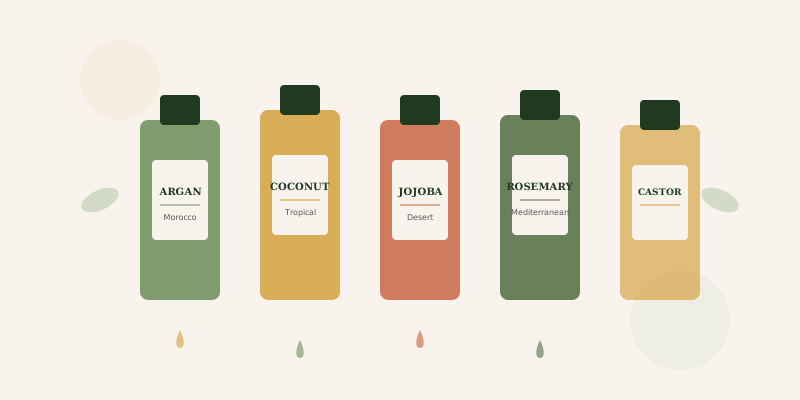
Walk into any beauty store and you'll find oils for hair promising everything from growth to repair to shine. But not all oils do the same thing. Some penetrate the hair shaft; others sit on the surface. Some are lightweight; others are heavy. Some have solid evidence behind them; others rely on tradition and marketing.
Here's a chemistry-based breakdown of 10 popular natural oils for hair — what each one actually does, who it suits, and how to use it.
1. Argan Oil
Argania spinosa kernel oil
Pressed from the kernels of the Moroccan argan tree, argan oil is often called "liquid gold" — and for good reason. It's rich in vitamin E (tocopherols), essential fatty acids (primarily oleic and linoleic acid), and antioxidants.
What it does: Argan oil is an emollient — it smooths the cuticle and reduces friction. Unlike heavier oils, it penetrates the hair shaft to some degree, providing internal moisture. Studies suggest it reduces breakage by improving hair elasticity and protects against heat damage.
Best for: Most hair types, especially frizz-prone and medium-porosity hair. Fine hair can use it sparingly on ends.
2. Coconut Oil
Cocos nucifera oil
Coconut oil is unique among hair oils because of its molecular structure. Its low molecular weight and straight linear chain allow it to penetrate the hair shaft more deeply than most other oils.
What it does: Research published in the Journal of Cosmetic Science found that coconut oil reduces protein loss in both undamaged and damaged hair when used as a pre-wash treatment. It penetrates the cortex, protecting the hair's structural proteins from swelling during washing.
Best for: Pre-wash treatments, especially for dry, damaged, or high-porosity hair. Can be heavy for fine or low-porosity hair.
3. Jojoba Oil
Simmondsia chinensis seed oil
Technically a liquid wax rather than an oil, jojoba closely mimics human sebum in molecular structure. This makes it uniquely compatible with the skin and scalp.
What it does: Jojoba oil is a lightweight emollient that doesn't penetrate deeply but forms a breathable, non-greasy seal on the hair shaft. Its sebum-like structure helps balance scalp oil production — it moisturizes without overwhelming.
Best for: All hair types, especially oily scalps, fine hair, and low-porosity hair that's easily weighed down.
4. Sweet Almond Oil
Prunus amygdalus dulcis oil
Rich in vitamin E, magnesium, and essential fatty acids, sweet almond oil is a versatile, lightweight emollient.
What it does: Almond oil smooths the cuticle, adds shine, and provides lightweight moisture. It's less penetrating than coconut oil but lighter than olive oil, making it a good middle-ground option. Some evidence suggests it may help soothe scalp inflammation.
Best for: Normal to dry hair; scalp massages; fine to medium hair textures.
5. Olive Oil
Olea europaea oil
A staple in Mediterranean hair care for centuries, olive oil is heavy and rich — high in oleic acid and antioxidants.
What it does: Olive oil penetrates the hair shaft (though not as deeply as coconut oil) and provides intense emollience. It's excellent for sealing in moisture and softening coarse, dry hair. However, it can leave a residue and is difficult to wash out.
Best for: Coarse, thick, coily, or high-porosity hair. Too heavy for fine hair.
6. Castor Oil
Ricinus communis seed oil
Castor oil is thick, viscous, and rich in ricinoleic acid — a rare fatty acid with anti-inflammatory properties. It's one of the most popular oils in DIY hair growth treatments.
What it does: Castor oil is a heavy occlusive — it seals in moisture and creates a protective barrier. While there's no direct clinical evidence that castor oil promotes hair growth, its ricinoleic acid may support scalp health by reducing inflammation. Anecdotal reports of thicker hair likely relate to improved scalp condition and reduced breakage.
Best for: Scalp massages (diluted with a lighter oil); coily hair; eyebrow and lash conditioning. Use sparingly.
"No oil has been definitively proven to regrow hair. What oils can do is improve scalp condition, reduce breakage, and create an environment where healthy growth is possible."
7. Rosemary Oil
Rosmarinus officinalis oil
Rosemary essential oil has gained attention for a 2015 study showing it performed comparably to 2% minoxidil (Rogaine) for androgenetic alopecia over six months — without the side effects.
What it does: Rosemary oil may improve circulation to the scalp and has anti-inflammatory properties. The 2015 study suggested it could be effective for pattern hair loss, though more research is needed. It must always be diluted in a carrier oil (1-2% concentration) — applying it neat can cause severe irritation.
Best for: Scalp treatments aimed at supporting growth. Dilute 3-5 drops in a tablespoon of carrier oil. Not for use during pregnancy without medical supervision.
8. Avocado Oil
Persea gratissima oil
Pressed from avocado pulp, this oil is rich in vitamins A, B, D, E, and monounsaturated fats. It's heavier than argan but lighter than castor.
What it does: Avocado oil penetrates the hair shaft and provides deep moisturization. Its vitamin content supports scalp health, and its monounsaturated fats help strengthen the hair. Studies suggest it may help repair heat-damaged hair.
Best for: Dry, damaged, or high-porosity hair. Deep conditioning treatments.
9. Grapeseed Oil
Vitis vinifera seed oil
A byproduct of winemaking, grapeseed oil is one of the lightest hair oils available. It's high in linoleic acid and vitamin E.
What it does: Grapeseed oil provides lightweight moisture and shine without weighing hair down. Its high smoke point makes it suitable for heat protection (though it shouldn't replace a dedicated heat protectant). It's easily absorbed and doesn't leave residue.
Best for: Fine, thin, or low-porosity hair. Excellent as a daily finishing oil.
10. Tea Tree Oil
Melaleuca alternifolia oil
Tea tree essential oil is valued for its antimicrobial and anti-fungal properties. It's not a moisturizing oil — it's a treatment oil used for specific scalp concerns.
What it does: Research supports tea tree oil's effectiveness against Malassezia, the yeast associated with dandruff. A 2002 study found that a 5% tea tree oil shampoo significantly reduced dandruff symptoms. It may also help with mild scalp acne.
Best for: Dandruff-prone or oily scalps. Always dilute (1-2% in a carrier oil or shampoo). Never apply undiluted — it's a common cause of contact dermatitis.
Penetrating vs. Sealing Oils
Understanding whether an oil penetrates or seals is key to using it effectively:
- Penetrating oils (coconut, avocado, olive) enter the hair shaft and moisturize from within. Best used as pre-wash treatments.
- Sealing oils (jojoba, argan, grapeseed) coat the outside of the hair and lock in existing moisture. Best used on damp hair after washing.
- Occlusive oils (castor) form a heavy barrier. Best for sealing ends or scalp treatments.
How to Use Hair Oils Effectively
- Pre-poo treatment: Apply a penetrating oil (coconut, avocado) to dry hair 30 minutes before washing. This reduces protein loss during cleansing.
- Hot oil treatment: Warm a sealing oil and apply to damp hair. Cover with a cap and leave for 30 minutes before washing.
- Finishing oil: Apply a few drops of lightweight oil (argan, grapeseed) to ends of damp or dry hair to smooth and add shine.
- Scalp treatment: Massage diluted essential oils (rosemary, tea tree) into the scalp. Leave for 30 minutes to overnight, then wash.
A Note on Expectations
Oils are not miracle workers. They can moisturize, seal, protect, and support scalp health — but they won't reverse genetic hair loss, repair split ends (only a trim can do that), or dramatically change your hair texture. Use them as part of a balanced routine, choose the right oil for your hair type, and be consistent.
The beauty of natural oils is their versatility and longevity. A single bottle can serve as a pre-wash treatment, finishing oil, or scalp massage medium. Start with one or two that match your hair type, and experiment to find what works best for you.

Related reading: DIY Hair Masks · Ingredient Database · Scalp Health