
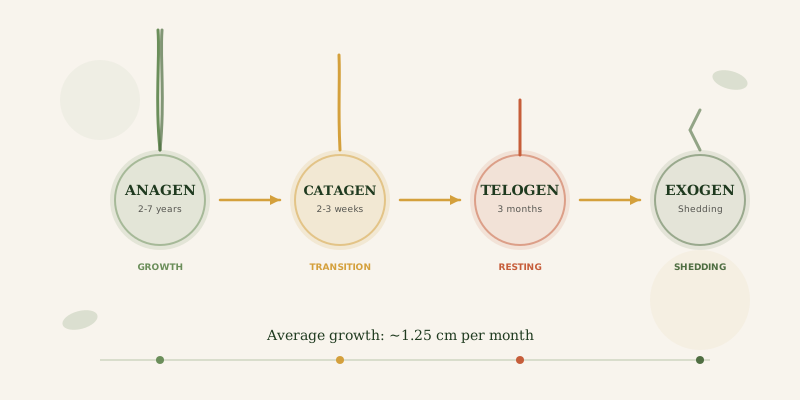
"How can I make my hair grow faster?" is one of the most common questions in hair care. The internet is full of answers — supplements, oils, scalp treatments, ancient remedies — but very few are backed by evidence. To separate fact from fiction, we need to understand how hair growth actually works.
This guide covers the hair growth cycle, the factors that influence growth, and the interventions that have actual scientific support. Spoiler: most "hair growth" products don't do what they claim.
The Hair Growth Cycle
Hair growth is not continuous. Each follicle cycles through four distinct phases:
Anagen (Growth Phase)
This is the active growth phase, when the follicle produces new hair. The anagen phase lasts 2-7 years, and about 85-90% of your hair is in this phase at any given time. The length of your anagen phase determines how long your hair can grow — which is largely genetic. Hair grows approximately 1-1.5 cm per month during anagen.
Catagen (Transition Phase)
A brief 2-3 week transition where the follicle shrinks and detaches from the blood supply. Hair growth stops. About 1-2% of hairs are in catagen at any time.
Telogen (Resting Phase)
The follicle rests for about 3 months. The hair remains in the follicle but doesn't grow. About 10-15% of hairs are in telogen at any time.
Exogen (Shedding Phase)
The old hair is shed, and the follicle re-enters anagen to begin growing a new hair. Normal shedding is 50-100 hairs per day.
The entire cycle means that at any given time, different hairs are in different phases. This is why you shed hair daily without going bald — as long as the cycle continues normally.
"You can't make hair grow faster than your genetics allow. What you can do is create optimal conditions for growth and minimize factors that disrupt the cycle."
What Determines Hair Growth Rate?
The maximum rate and duration of hair growth is primarily genetic. You cannot make hair grow faster than your genetic programming allows — no supplement, oil, or treatment changes this. However, several factors influence whether your hair reaches its genetic potential:
1. Nutrition
Hair growth requires adequate nutrients. Deficiencies in the following can slow growth or cause shedding:
- Iron: Iron deficiency is a leading cause of hair loss in women. Ferritin levels below 30 ng/mL are associated with increased shedding.
- Protein: Hair is made of protein; inadequate intake compromises growth.
- Vitamin D: Receptors in hair follicles require vitamin D for normal cycling.
- B vitamins (especially biotin): Biotin deficiency is rare but can cause hair loss. Supplementing helps only if you're deficient.
- Zinc: Essential for follicle cell division and protein synthesis.
If your diet is adequate, supplements won't accelerate growth beyond your genetic baseline. Supplements help only when there's a deficiency.
2. Hormones
Hormonal changes significantly affect hair growth:
- Androgens: Dihydrotestosterone (DHT) miniaturizes follicles in androgenetic alopecia (pattern baldness), shortening the anagen phase.
- Thyroid: Both hypothyroidism and hyperthyroidism can cause hair loss.
- Estrogen: Prolongs anagen. This is why pregnant women often experience thicker hair; post-pregnancy estrogen drop triggers shedding (telogen effluvium).
- Cortisol: Chronic stress elevates cortisol, which can push hairs into telogen prematurely.
3. Scalp Health
A healthy scalp provides the environment follicles need. Poor circulation, inflammation, and microbial imbalance can all impair growth. See our scalp health guide for detailed information.
4. Age
Hair growth rate and anagen duration decrease with age. Follicles also produce thinner hair shafts over time. This is a natural process that cannot be reversed, only managed.
What Actually Works for Hair Growth
Here's where the evidence stands for popular hair growth interventions:
Minoxidil (Rogaine) — Strong Evidence
Minoxidil is the most well-researched topical hair growth treatment. Originally a blood pressure medication, it was found to stimulate hair growth as a side effect. Applied to the scalp (2% or 5%), it:
- Prolongs the anagen phase
- Increases follicle size
- Improves blood flow to follicles
- Is FDA-approved for androgenetic alopecia
Minoxidil works for both male and female pattern hair loss. It requires consistent daily use; stopping causes any regrown hair to shed within months. It's most effective for recent hair loss and less effective for long-standing baldness.
Finasteride — Strong Evidence (Men)
An oral prescription medication that blocks the enzyme (5-alpha-reductase) that converts testosterone to DHT. By reducing DHT, finasteride slows follicle miniaturization in androgenetic alopecia. It's FDA-approved for men but generally not prescribed for women of childbearing age due to teratogenic risk.
Rosemary Oil — Emerging Evidence
A 2015 study found that rosemary essential oil (applied as a scalp treatment) performed comparably to 2% minoxidil for androgenetic alopecia over 6 months. The proposed mechanism is improved scalp circulation and anti-inflammatory effects.
Caveat: This was a single study with a small sample. More research is needed. Rosemary oil is not a replacement for proven treatments like minoxidil, but it may be a reasonable complementary approach. Always dilute essential oils (1-2% in a carrier oil).
Scalp Massage — Some Evidence
A 2016 study found that 4 minutes of daily standardized scalp massage over 24 weeks increased hair thickness in Japanese men. The proposed mechanism is improved blood flow and mechanical stimulation of follicles. This is low-risk and free — worth trying.
Microneedling — Growing Evidence
Microneedling involves creating tiny punctures in the scalp with fine needles, which may stimulate follicle stem cells and enhance absorption of topical treatments. Studies suggest it enhances minoxidil effectiveness when used in combination. This should be done with proper guidance to avoid infection or scarring.
Platelet-Rich Plasma (PRP) — Some Evidence
PRP involves injecting concentrated platelets from your own blood into the scalp. Growth factors in platelets may stimulate follicles. Some studies show promising results for androgenetic alopecia, but it's expensive, requires multiple sessions, and evidence is still accumulating.
What Doesn't Work (or Lacks Evidence)
Biotin Supplements (Unless Deficient)
Despite massive marketing, there's no evidence that biotin supplementation increases hair growth in people with normal biotin levels. Biotin deficiency is rare. Unless a blood test shows deficiency, biotin supplements are unlikely to help — and excess biotin can interfere with lab tests (including thyroid and cardiac markers).
Castor Oil for Growth
Castor oil is widely promoted for hair growth, but there's no clinical evidence that it accelerates growth. It may improve scalp health (anti-inflammatory ricinoleic acid) and reduce breakage (giving the appearance of faster growth), but it doesn't stimulate follicles to grow faster.
"Hair Growth" Shampoos
Shampoos marketed for hair growth typically contain ingredients like caffeine, saw palmetto, or ketoconazole. While some of these have theoretical mechanisms, the contact time (minutes before rinsing) is too short for meaningful absorption. Shampoo can support scalp health but won't stimulate growth.
Inversion Method
The claim: massaging the scalp with oil while hanging your head upside down for 4 minutes daily speeds growth by increasing blood flow. There's no scientific evidence supporting this specific method. Scalp massage may help (see above), but the inversion component is speculative.
Managing Hair Loss: A Realistic Approach
If you're experiencing hair thinning or loss, the most important step is identifying the cause. Common causes include:
- Androgenetic alopecia: Genetic pattern hair loss (most common)
- Telogen effluvium: Temporary shedding from stress, illness, or hormonal change (often resolves in 3-6 months)
- Alopecia areata: Autoimmune condition causing patchy loss
- Nutritional deficiencies: Iron, vitamin D, zinc, protein
- Medical conditions: Thyroid disorders, PCOS, scalp infections
- Medications: Some drugs cause hair loss as a side effect
See a dermatologist for diagnosis. Different causes require different treatments. What works for pattern hair loss (minoxidil) won't help an autoimmune condition. Self-diagnosing and self-treating can waste money and delay effective treatment.
Supporting Healthy Growth: Evidence-Based Practices
While you can't exceed your genetic growth rate, you can create optimal conditions:
- Eat a balanced diet with adequate protein, iron, zinc, and vitamins. Get bloodwork done if you suspect deficiencies.
- Maintain scalp health — gentle cleansing, regular massage, pH balance.
- Minimize breakage — reducing breakage gives the appearance of faster growth because you retain more length. See our hair type guide.
- Manage stress — chronic stress disrupts the growth cycle. Exercise, sleep, and stress management support healthy hair.
- Avoid damaging practices — excessive heat, chemical over-processing, and tight hairstyles cause breakage and can damage follicles.
- Be patient — hair grows about 1-1.5 cm per month. Visible results from any intervention take 3-6 months.
The Bottom Line
Hair growth is a slow, genetically determined process. No product, supplement, or treatment can make hair grow significantly faster than your genetics allow. What you can do is:
- Ensure nutritional adequacy through diet
- Maintain a healthy scalp environment
- Minimize breakage to retain length
- Use proven treatments (minoxidil, finasteride) if experiencing pattern hair loss
- Consult a dermatologist for persistent hair loss
Be skeptical of "miracle" hair growth products. If something sounds too good to be true — "grow 2 inches in a week!" — it almost certainly is. The most effective approach is realistic, patient, and evidence-based: optimize what you can control, seek professional help for hair loss, and understand that healthy hair is the result of consistent care over months and years, not overnight solutions.
Your hair is growing right now — at the rate your genetics have set. Your job isn't to speed it up, but to create the conditions where it can grow at its best.

Related reading: Scalp Health: The Foundation · 10 Natural Oils for Hair · Protein Treatments