
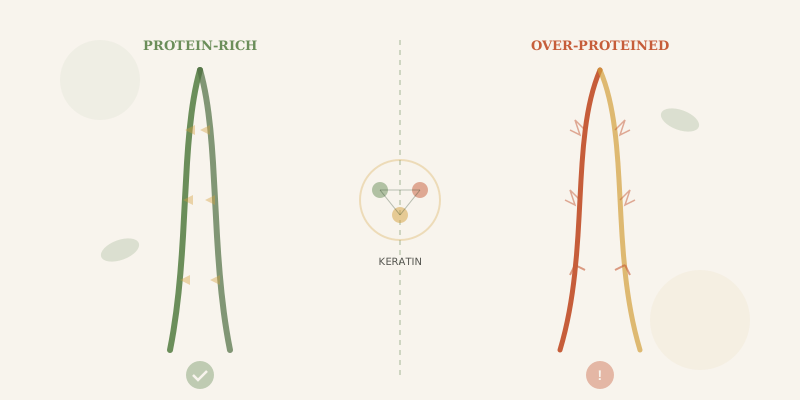
Protein treatments are marketed as the solution to damaged, weak, or breaking hair. But here's the paradox: too much protein can make hair more brittle, not less. The key to using protein effectively is understanding when your hair actually needs it — and when it doesn't.
This guide covers the science of protein in hair care, how to tell if your hair needs protein, the different types of protein treatments, and how to avoid the dreaded "protein overload."
The Role of Protein in Hair
Hair is made primarily of keratin — a fibrous protein that gives hair its structure and strength. The hair shaft is about 91% protein (keratin), with the remainder being water, lipids, and trace minerals.
When hair is damaged — by chemical processing, heat, mechanical stress, or environmental factors — the keratin structure is compromised. Cuticle layers lift or break away, and the cortex (the inner structure) can develop gaps where protein has been lost. This leads to weak, porous, breakage-prone hair.
Protein treatments work by depositing hydrolyzed (broken-down) proteins onto and into the hair shaft, temporarily filling in these gaps and reinforcing the structure. They don't permanently repair hair (only a haircut removes damage), but they can significantly improve strength and reduce breakage while the treatment lasts.
Types of Protein in Hair Products
Not all proteins are the same. The size of the protein molecule determines how deeply it penetrates:
1. Hydrolyzed Keratin
The most common protein in hair treatments. Keratin is the protein hair is naturally made of, so it has high affinity for the hair shaft. Hydrolyzed keratin is broken into small fragments that can penetrate the cuticle and temporarily fill gaps in the cortex.
Best for: Chemically damaged, high-porosity, or severely weakened hair.
2. Hydrolyzed Silk
Silk protein has very small molecular size, allowing it to penetrate deeply. It's known for leaving hair smooth and silky without stiffness. Silk protein also has high moisture-binding capacity.
Best for: Fine hair (won't weigh it down); adding shine and smoothness.
3. Hydrolyzed Wheat Protein
A plant-based protein that forms a film on the hair surface, adding volume and structural support. Wheat protein is larger than silk and doesn't penetrate as deeply, but it's excellent for surface strengthening.
Best for: Fine, limp hair that needs volume; vegetarians/vegans.
4. Hydrolyzed Collagen
Derived from animal connective tissue, collagen protein is known for its moisture-retaining properties. It's a larger molecule that primarily coats the hair surface, improving elasticity and smoothness.
Best for: Aging hair; improving elasticity and moisture retention.
5. Hydrolyzed Rice Protein
A plant-based protein that adds volume and shine. Rice protein forms a film that increases hair diameter slightly, making it feel thicker.
Best for: Fine, thin hair; volumizing effects.
"Protein doesn't heal hair — it reinforces it. Think of it as a temporary cast for a broken bone, not a cure."
Signs Your Hair Needs Protein
How do you know if your hair would benefit from a protein treatment? Look for these signs:
- Excessive stretch: When wet, healthy hair stretches slightly and returns. If your hair stretches significantly without springing back, it may lack protein (and have excess moisture).
- Breakage: Hair snapping easily, especially when wet, suggests structural weakness.
- High porosity: If your hair absorbs water instantly and dries very fast, the cuticle may be damaged, and protein can help fill gaps.
- Chemical damage: Bleached, relaxed, or permed hair almost always benefits from protein.
- Gummy texture when wet: Hair that feels mushy or gummy when wet often has too much moisture and not enough protein.
Signs Your Hair Has Too Much Protein
Protein overload is real. Too much protein makes hair rigid, brittle, and prone to breaking. Signs include:
- Stiff, straw-like texture: Hair feels dry and brittle, even when moisturized.
- Increased breakage: Paradoxically, too much protein causes the same symptom as too little — breakage. The difference is the texture: protein-overloaded hair is stiff, protein-deficient hair is stretchy.
- Dull appearance: Excess protein coating can make hair look lifeless.
- Tangling: Hair that suddenly tangles easily may be over-proteined.
- No elasticity: Hair that doesn't stretch at all when wet — it just snaps — has too much protein.
The Protein-Moisture Balance
The most important concept in protein use is balance. Hair needs both protein (for strength) and moisture (for elasticity). When these are in balance, hair is strong yet flexible. When out of balance in either direction, hair suffers.
- Too much moisture, too little protein: Hair is mushy, over-stretchy, and weak.
- Too much protein, too little moisture: Hair is stiff, brittle, and breaks easily.
- Balanced: Hair stretches slightly when wet and returns to its original length. It feels strong but not rigid.
The goal isn't to maximize protein — it's to find the right balance for your hair's current condition.
How to Use Protein Treatments
For Damaged or High-Porosity Hair
Use a protein treatment every 1-2 weeks. Follow every protein treatment with a moisturizing deep conditioner to maintain balance. Alternate protein and moisture treatments on different wash days.
For Mildly Damaged Hair
Use a light protein treatment (or a conditioner containing protein) every 2-3 weeks. This maintains strength without risking overload.
For Healthy, Undamaged Hair
You likely don't need dedicated protein treatments. A conditioner with a small amount of protein (if it appears mid-list in ingredients) is sufficient for maintenance. Over-treating healthy hair with protein is a common mistake.
For Fine Hair
Fine hair has less keratin naturally and can benefit from protein more than coarse hair. However, fine hair is also more easily overloaded. Use small amounts of lightweight proteins (silk, rice) rather than heavy keratin treatments.
For Coily Hair
Type 4 hair is the most fragile and often benefits from regular protein. However, coily hair also needs intense moisture. Balance is critical — alternate protein treatments with rich moisturizing treatments.
Recovering from Protein Overload
If you've overdone protein, don't panic. Recovery is straightforward:
- Stop all protein products immediately. Check your shampoo, conditioner, leave-in, and styling products for "hydrolyzed" proteins.
- Clarify with a deep-cleansing shampoo to remove protein buildup.
- Deep condition with moisture — use a protein-free, moisture-rich mask 1-2 times weekly.
- Be patient. Recovery takes 2-4 weeks as the excess protein gradually washes away.
DIY Protein Treatments
You can make mild protein treatments at home using kitchen ingredients:
- Egg mask: 1 egg + 1 tablespoon olive oil. Apply to damp hair for 20 minutes. Rinse with cool water (never hot). Eggs contain protein and lecithin.
- Yogurt mask: Full-fat plain yogurt contains milk proteins and lactic acid. Apply for 30 minutes, then shampoo.
- Gelatin treatment: 1 tablespoon unflavored gelatin dissolved in warm water. Gelatin is hydrolyzed collagen. Use sparingly — this is a strong protein treatment.
See our DIY hair masks guide for full recipes and safety guidelines.
Choosing a Commercial Protein Treatment
When shopping for protein treatments, consider:
- Protein type and position: If protein is in the first 5 ingredients, it's a strong treatment. If it's further down, it's a light treatment suitable for regular use.
- Protein size: "Hydrolyzed" means the protein is broken down for penetration. Non-hydrolyzed proteins (like whole egg) sit on the surface.
- Moisture content: The best treatments include both protein and moisture (humectants, emollients) for balanced results.
- Your hair's condition: Match the strength of the treatment to your level of damage.
The Bottom Line
Protein treatments are powerful tools for strengthening damaged hair — but they're not for everyone, and more isn't better. The key is understanding your hair's current state, using protein only when needed, and maintaining the critical protein-moisture balance.
If your hair is damaged, high-porosity, or chemically treated, protein treatments can reduce breakage and improve strength. If your hair is healthy, you likely don't need them. And if you've been using protein and your hair has become stiff and brittle, it's time to stop and focus on moisture.
Listen to your hair. It will tell you what it needs — if you pay attention to how it feels, stretches, and behaves when wet and dry. That feedback, more than any product label, is your best guide.

Related reading: DIY Hair Masks · Understanding Your Hair Type · Scalp Health