
You can use the best shampoo, the most nourishing conditioner, and the most expensive treatments — but if your scalp isn't healthy, your hair won't be either. The scalp is where hair is born, and its condition directly affects hair growth, strength, and appearance.
Yet scalp care is often the most neglected part of a hair care routine. Let's change that. Here's everything you need to know about scalp health, backed by dermatology and trichology.
The Anatomy of the Scalp
The scalp is more than just skin on your head. It's a complex ecosystem with several critical components:
Hair Follicles
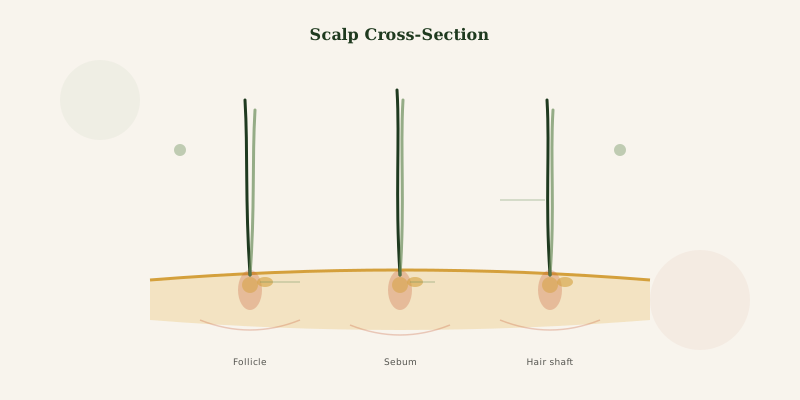
The scalp contains approximately 100,000 hair follicles — the structures that produce hair. Each follicle goes through cycles of growth (anagen), transition (catagen), rest (telogen), and shedding (exogen). A healthy follicle produces strong, thick hair; a compromised follicle produces weaker, thinner hair — or stops producing altogether.
Sebaceous Glands
Attached to each follicle is a sebaceous gland that produces sebum — the scalp's natural oil. Sebum moisturizes the hair shaft and scalp, maintains the acid mantle (the scalp's protective pH), and has mild antimicrobial properties. Too little sebum leads to dryness; too much leads to oiliness.
The Acid Mantle
The scalp's surface has a natural pH of about 4.5-5.5, slightly acidic. This acid mantle is the scalp's first line of defense against harmful bacteria and fungi. Disrupting the pH — with harsh alkaline products, for instance — compromises this barrier and can lead to irritation, flaking, and microbial overgrowth.
The Microbiome
The scalp hosts a diverse community of microorganisms — bacteria and fungi that live in balance. When this balance is disrupted (by stress, diet, harsh products, or illness), certain microbes can overgrow. Malassezia, a yeast naturally present on the scalp, is associated with dandruff when it proliferates excessively.
Blood Supply
Hair follicles are nourished by a network of blood vessels. Adequate blood flow delivers oxygen and nutrients essential for hair growth. Poor circulation — from stress, smoking, or tight hairstyles — can compromise follicle health.
"Treat your scalp like you treat the soil in a garden. Healthy soil grows healthy plants; a healthy scalp grows healthy hair."
Common Scalp Conditions
Dandruff
Dandruff is characterized by white or yellowish flakes of dead skin on the scalp and in the hair. It's caused by a combination of factors: overgrowth of Malassezia yeast, increased sebum production, and individual sensitivity to Malassezia byproducts. It's not caused by poor hygiene.
Management: Anti-dandruff shampoos containing zinc pyrithione, ketoconazole, selenium sulfide, or coal tar are effective. Tea tree oil (5% concentration) has shown comparable effectiveness in some studies. Rotate active ingredients monthly to prevent tolerance.
Seborrheic Dermatitis
A more severe form of dandruff, seborrheic dermatitis causes redness, itching, and greasy yellow scales. It's linked to Malassezia overgrowth and inflammatory response. It often affects the scalp, eyebrows, and sides of the nose.
Management: Medicated shampoos (ketoconazole 2%, ciclopirox, selenium sulfide) used 2-3 times weekly. Severe cases may require prescription topical steroids. Consult a dermatologist.
Dry Scalp
Unlike dandruff, dry scalp produces small, white flakes caused by dehydration of the skin. It's often triggered by cold weather, hot showers, harsh cleansers, or insufficient sebum production.
Management: Gentle, sulfate-free cleansers; shorter, cooler showers; scalp oils (jojoba, argan) massaged in; humidifiers in dry climates.
Oily Scalp
Excessive sebum production causes hair to look greasy quickly. It can be genetic, hormonal, or triggered by over-washing (which strips the scalp, prompting it to produce more oil to compensate).
Management: Gentle cleansing (not harsh stripping); aloe vera to balance pH; diluted tea tree oil; avoid heavy products near the scalp.
Scalp Psoriasis and Eczema
These inflammatory skin conditions can affect the scalp, causing redness, itching, scaling, and discomfort. They require medical management.
Management: Consult a dermatologist. Treatment may include medicated shampoos, topical steroids, calcipotriene, or systemic medications.
The Principles of Scalp Care
1. Cleanse Gently and Regularly
The scalp needs regular cleansing to remove sebum, sweat, dead skin cells, and product residue. But harsh cleansing strips the acid mantle and triggers compensatory oil production. The ideal frequency depends on your scalp type — oily scalps may need daily cleansing; dry scalps may need it only once or twice weekly.
2. Maintain pH Balance
Your scalp's natural pH is 4.5-5.5. Many conventional shampoos are alkaline (pH 7-8), which can disrupt the acid mantle. Look for pH-balanced products or follow washing with an acidic rinse (diluted apple cider vinegar, 1 tablespoon per cup of water) to restore the scalp's pH.
3. Exfoliate Occasionally (But Gently)
Scalp exfoliation removes dead skin cells and product buildup. However, the scalp is more delicate than facial skin. Chemical exfoliants (salicylic acid, lactic acid in low concentrations) are gentler than physical scrubs. Limit exfoliation to once every 1-2 weeks.
4. Massage to Stimulate Circulation
Scalp massage increases blood flow to the follicles, delivering oxygen and nutrients. A 2016 study found that 4 minutes of daily scalp massage over 24 weeks increased hair thickness in some participants. Use fingertips (not nails) and gentle circular motions for 3-5 minutes daily.
5. Avoid Traction and Friction
Tight hairstyles (ponytails, braids, extensions) pull on follicles and can cause traction alopecia — hair loss from constant tension. Give your scalp breaks from tight styles. Avoid sleeping with hair tied tightly.
6. Protect from Sun
The scalp can sunburn, especially where hair is thin. UV damage affects follicle health and can contribute to hair thinning. Wear hats in direct sun, or use scalp-specific SPF products where hair parts.
Scalp-Friendly Ingredients
- Aloe vera: Soothes inflammation, pH-balancing, hydrating
- Tea tree oil (diluted): Antimicrobial; helps with dandruff
- Salicylic acid (low %): Gentle exfoliation; reduces flaking
- Niacinamide: Reduces inflammation; supports barrier function
- Rosemary oil (diluted): May stimulate circulation
- Peppermint oil (diluted): Cooling; may stimulate blood flow
Scalp Care Don'ts
- Don't use hot water: It strips natural oils and irritates the scalp. Use warm or cool water.
- Don't apply conditioner to the scalp: Conditioner is for hair lengths; applying it to the scalp can clog follicles and cause buildup.
- Don't use harsh physical scrubs: Salt, sugar, and walnut shell scrubs can micro-tear the scalp. Use chemical exfoliants instead.
- Don't ignore persistent issues: If you have persistent itching, redness, flaking, or hair loss, see a dermatologist. Self-treating can worsen conditions.
- Don't over-wash: Stripping the scalp triggers compensatory oil production. Find your ideal frequency.
Building a Scalp Care Routine
- Cleanse: Use a pH-balanced, appropriately gentle shampoo. Focus on the scalp, not the lengths.
- Treat (weekly): Once weekly, use a targeted scalp treatment — a salicylic acid exfoliant, a clay mask, or a diluted essential oil scalp massage.
- Massage: Daily 3-5 minute scalp massage to stimulate circulation.
- Protect: Wear a hat in sun; avoid tight styles; manage stress (which affects scalp conditions).
When to See a Professional
Most scalp issues can be managed with good habits. But see a dermatologist if you experience:
- Persistent itching, redness, or pain
- Sudden or patchy hair loss
- Scalp lesions, sores, or pus
- Severe flaking that doesn't respond to OTC treatments
- Burning or stinging sensations
These symptoms may indicate conditions that require medical treatment, not cosmetic care.
The Bottom Line
Your scalp is the foundation of your hair. Investing in scalp health pays dividends in hair quality, growth, and manageability. Cleanse gently, maintain pH, massage regularly, protect from damage, and don't hesitate to seek professional help for persistent issues.
Remember: the healthiest hair grows from the healthiest scalp. Treat your scalp with the same care you give your face, and your hair will thank you.

Related reading: The Science of Hair Growth · 10 Natural Oils · Understanding Your Hair Type