
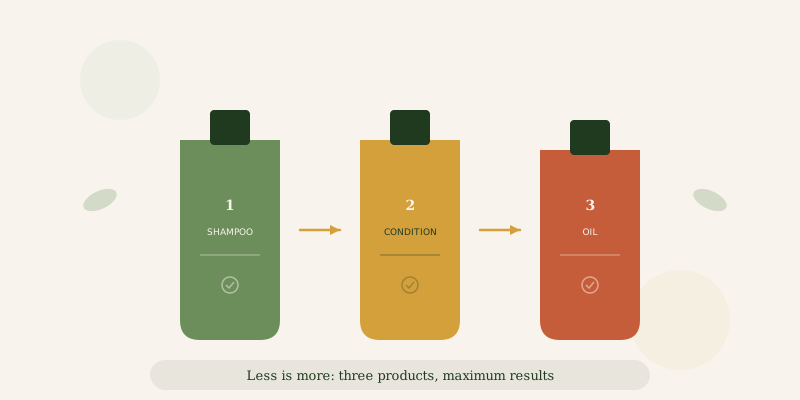
If your shower shelf is crowded with half-empty bottles — a shampoo for color, a conditioner for moisture, a mask for repair, a leave-in for detangling, an oil for shine — you're not alone. The beauty industry profits from the idea that each concern requires a separate product. But effective hair care doesn't require a dozen bottles.
A minimalist routine isn't about deprivation. It's about identifying the few products that genuinely serve your hair and letting go of the rest. Here's how to build a routine that's simple, effective, and sustainable.
The Three-Product Framework
Most hair can thrive with just three core products. Everything else is optional or situational.
1. A Cleanser (Shampoo or Co-wash)
The foundation of any routine. Your cleanser removes sebum, sweat, product buildup, and environmental dirt. Choose based on your hair type:
- Oily or straight hair: A gentle sulfate shampoo (SLES-based) used 2-3 times per week.
- Normal or wavy hair: A sulfate-free shampoo for regular use, with a clarifying shampoo monthly.
- Curly or coily hair: A sulfate-free shampoo or co-wash (cleansing conditioner) for regular use, with occasional clarifying.
The key is matching the cleanser strength to your hair's needs. Too harsh and you strip moisture; too gentle and buildup accumulates.
2. A Conditioner
Conditioner restores moisture, detangles, and smooths the cuticle after cleansing. A good conditioner contains emollients (for softening), humectants (for moisture), and sometimes protein (for strength).
For a minimalist routine, choose one conditioner that works for daily use and can double as a deep treatment when left on longer. Look for ingredients like cetearyl alcohol, behentrimonium methosulfate, glycerin, and panthenol.
3. A Leave-In or Styling Product
This is where personalization matters most. Your leave-in serves your primary styling or protection need:
- For frizz and heat protection: A lightweight silicone serum or cream
- For curl definition: A curl cream or gel
- For fine hair volume: A root-lifting spray
- For moisture sealing: A few drops of argan or jojoba oil
"The best routine is one you'll actually follow. A simple routine done consistently beats an elaborate routine done sporadically every time."
What You Don't Need
Many products marketed as "essential" are actually redundant or situational:
Separate Shampoo for Every Concern
"Color-safe," "moisturizing," "volumizing," "clarifying" — a single gentle, sulfate-free shampoo handles daily needs. Clarifying once a month handles buildup. You don't need a different shampoo for each concern.
Daily Deep Conditioner
Deep conditioning is beneficial, but a weekly mask is sufficient. Your regular conditioner, left on for 5 extra minutes with a shower cap, works almost as well for in-between weeks.
Multiple Leave-Ins
A leave-in spray, a styling cream, a heat protectant, and a finishing oil can often be replaced by one multitasking product. If heat protection is your concern, choose a leave-in that includes it.
Scalp Scrubs and Tonics
Unless you have a specific scalp condition (dandruff, psoriasis), a gentle shampoo and regular washing keep the scalp healthy. Physical scrubs can actually damage the scalp barrier.
Building Your Routine: Step by Step
Step 1: Identify Your Hair Type
Before simplifying, know what you're working with. Determine your curl pattern, porosity, and strand thickness using the methods in our hair type guide. This determines which products you actually need.
Step 2: Audit Your Current Products
Lay out everything you use. For each product, ask: "What specific purpose does this serve? Could another product do this?" Be honest. If you haven't used a product in a month, it's not essential.
Step 3: Choose Your Three
Select one cleanser, one conditioner, and one leave-in that match your hair type. These are your core products. Give them 2-3 weeks of consistent use before evaluating results.
Step 4: Add Only What's Necessary
If after 3 weeks you find a genuine gap — say, your hair needs protein that your conditioner doesn't provide — add one targeted product. But don't add preemptively. Add only to solve a confirmed problem.
Sample Routines by Hair Type
For Straight, Fine Hair
- Cleanse: Gentle sulfate-free shampoo, 2-3x weekly
- Condition: Lightweight conditioner, ends only
- Style: Volumizing mousse or root lift spray
For Wavy Hair (Type 2)
- Cleanse: Sulfate-free shampoo, 2x weekly
- Condition: Moisturizing conditioner, full length
- Style: Wave-enhancing cream or sea salt spray
For Curly Hair (Type 3)
- Cleanse: Co-wash or sulfate-free shampoo, 1-2x weekly
- Condition: Rich conditioner with slip for detangling
- Style: Curl defining gel or cream on wet hair
For Coily Hair (Type 4)
- Cleanse: Co-wash, 1x weekly; shampoo 1-2x monthly
- Condition: Deep conditioner every wash day
- Style: Leave-in conditioner + sealing butter or cream
The Monthly Clarifying Exception
Even a minimalist routine benefits from an occasional reset. Once a month, use a clarifying shampoo (sulfate-based) to remove any accumulated buildup from hard water, styling products, or silicones. This ensures your core products continue performing at their best.
If you notice your hair suddenly feeling coated, dull, or resistant to conditioning, it's likely time to clarify rather than add new products.
Maintenance: When to Adjust
A minimalist routine isn't static. Seasonal changes, hormonal shifts, chemical treatments, and aging all affect your hair's needs. Review your routine quarterly:
- Is my cleanser still effectively cleaning without stripping?
- Is my conditioner providing adequate moisture and detangling?
- Is my leave-in achieving my primary styling goal?
If the answer to any is no, swap that single product. Don't add — replace. The goal is always three core products that work, not an expanding collection that sort-of works.
The Benefits of Going Minimal
Beyond saving money and bathroom space, a minimalist routine offers real benefits for your hair:
- Less product buildup means your hair responds more consistently to each product
- Fewer ingredients means fewer potential allergens and irritants
- Consistency — the single most important factor in hair health — becomes easier
- Environmental impact decreases with fewer bottles and less waste
Final Thoughts
The beauty industry thrives on the message that more products equal better results. The evidence suggests otherwise. Consistent use of a few well-chosen products outperforms a chaotic routine of a dozen bottles.
Start by identifying your hair type, choose three products that serve it, and give them time to work. You may be surprised by how little your hair actually needs — and how much better it looks when it's not overloaded.

Related reading: Understanding Your Hair Type · Reading Ingredient Labels · Sustainable Beauty